
Intro
Starting a D&D campaign is a lot like starting a great novel, an epic film, or a long-running TV series. You need a strong hook, a compelling setup, and — most importantly — a reason for everyone to care.
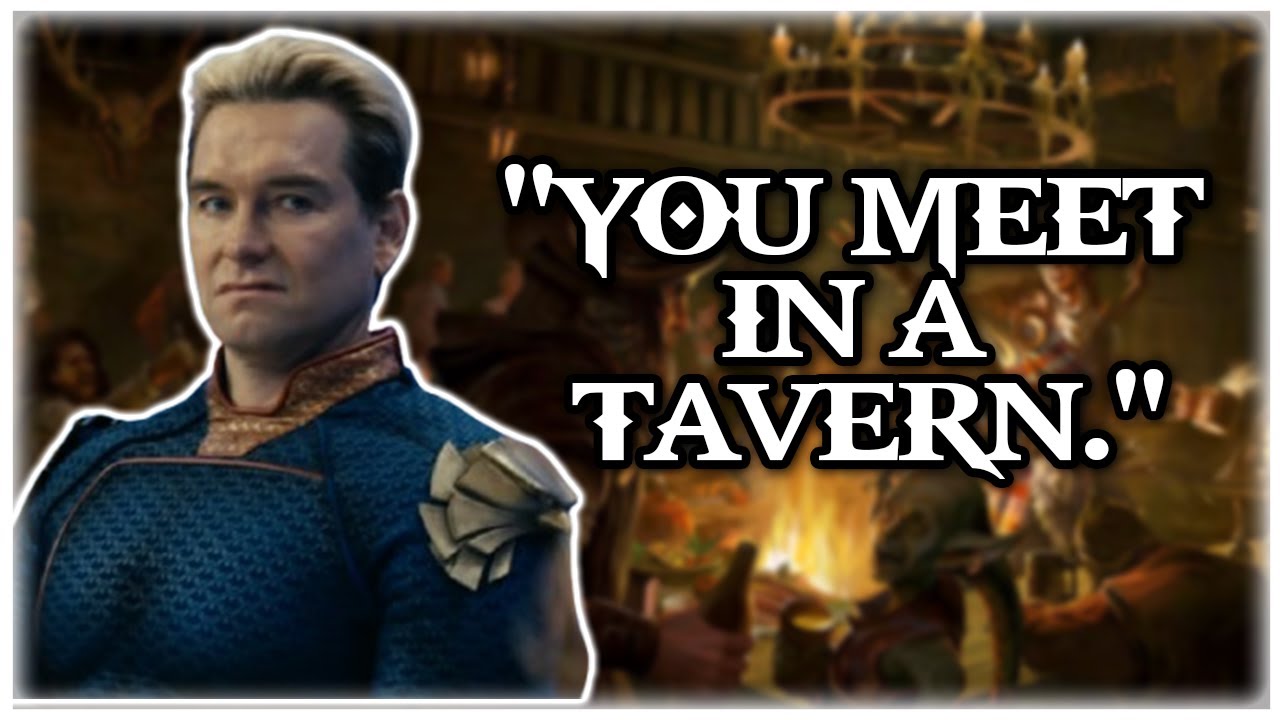
And yet so many campaigns I have played in, heard about, or watched start with absolutely nothing. The DM clears their throat and says:
“So, to start our session... you all meet in a tavern. And you happen to be sitting at the same table together. Go ahead and roleplay.”
Huh? What? No. No no no.
I do not know why I am here. I do not know what is going on. There are no stakes, there is no context, and most importantly there is no real motivation beyond well, I guess we are here now.
Now, in fairness: playing D&D is usually better than not playing D&D. A rough start where there is no guiding light is not the worst thing in the world, and plenty of great campaigns have survived one. But after what just happened with the Crimson Court — my campaign that just launched — believe me, you want to start off with a bang.
The good news is that starting strong is not luck. It is structure. Specifically, it is three pieces:
- Session zero — the game itself. Rules, expectations, safety tools, tone.
- Session 0.5 — the characters. Finding their voices, testing the water, one player at a time.
- Session one — the story. Your final bits of exposition and, crucially, the inciting incident.
Let us break down each one.
Part One: Session Zero — The Foundation
Session zero is your foundation. It is where you establish rules, expectations, and the themes of your campaign, so everyone is on the same page before the dice hit the table — in fact, before anyone has even started making a character.
House rules and mechanical changes
Start with the boring-but-load-bearing stuff. What are you changing about the game?
- Spell components are harder to find in this world.
- You are running a homebrew system for death and lingering injuries.
- Or, if you really, genuinely hate your players, you are banning counterspell.
None of these are bad choices. What is bad is discovering them in session four, in the middle of a fight, when a player has built three levels of character around an assumption you quietly overruled.
Triggers and boundaries
This one is the most important item on the list, and it is the one most likely to get rushed.
Every player needs to feel comfortable at the table. The first step to having fun is feeling comfortable around the people you are trying to have fun with. Session zero is where you discuss what people do not want in the game — body horror, torture, slavery, abuse, whatever the heavy themes are for your group.
And do not skip this one: what is everyone’s threshold for PvP? That single question has ended more friendships than any monster I have ever statted out.
One practical note. If this is a new group — people who do not know each other well yet — run this part as an anonymous survey. Players who barely know the table are not inclined to be honest about their limits, because they do not want to be the person who ruined everyone else’s fun. Anonymity removes that pressure entirely. If it is a group you have been playing with for years and everyone is comfortable, just talk it out.
The underlying principle is simple: D&D is a game for everyone at the table to have fun, not just one or two people for one or two hours at a time. Ideally everyone is having fun for the whole session, every session.
The world and the tone
Finally, tell them what kind of story this is. Is this a gritty survival game? A swashbuckling high-fantasy romp? A world of political drama, intrigue and betrayal?
Players need to know what they are walking into so they can build characters that fit the setting. Here is what happens when you skip it.
You decide you want to run a magical-girl, Sailor Moon-flavoured D&D campaign. Sounds fun. You mention it to a few players — but not to all of them. Four people show up with sparkling fantasy magical girls, and then Jeff arrives with a character who is essentially Geralt of Rivia: dark, edgy, gritty, covered in scars.
Nobody is wrong here. But the table looks at Jeff and thinks we did not sign up for that, and Jeff looks at the table and realises he made the wrong character. The tone clash grates on everybody, and the person it punishes hardest is the one player who was never told.
What works in one campaign setting, one genre, one flavour of tabletop RPG will not work in another. That is why you stress to your players, before they start brainstorming anything: sit down at session zero first.
If your campaign is already running and the tone has drifted since you set it, this same conversation still works — you just have to run it mid-flight. I wrote a whole piece on that: Session Zero 2.0.
Part Two: Session 0.5 — Letting the Players Find Their Voices
Session 0.5 is entirely about the characters.
This is the session right before your players drop into the main story, and they need a moment to figure out who their character actually is. How does this person talk? What drives them? Which relationships matter to them?
If you have ever done theatre, think of it as a dress rehearsal for the PC. No major story beats yet. Just a chance to step into the character’s shoes and get comfortable.
This one works best with a concrete example, so let us talk about the Crimson Court.
The ceremony
In my campaign, the players are the children of the current king of Ederia. Thanks to some complicated relationships in Talon’s past, the line of succession is unclear between his noble-born children and his bastards. Five kids total — all nobility, but very different slices of nobility, with very different lives growing up.
So I opened their 0.5 with all of them as children, going through a ceremony that every kid in Ederia goes through: they pick one item from three, and they keep it for the rest of their lives. Something they cherish. Something they hold onto.
Something that will definitely never come up again or matter at all in the campaign.
(It came up in session two. Love it when that happens.)
The three items might be a sword, a book, and a locket. Simple. But the choice is a character sheet in miniature — it tells you, and them, what this person values before they have said a word.
The golden nugget: be transparent
Here is the part I want you to actually take away from this section.
When I set that moment up, I told my players outright: pick based on your character as a whole — not on what a twelve-year-old Xanthe or a young Edwinn would pick.
Sometimes you should just be that transparent with your players. Tell them what you know. Let them do something with it.
One of the things I do consistently in my games is pull back the curtain. Pick the item based on who your character is, not who they were in this one scene. At the top of a fight with an unusual mechanic, I explain the mechanic before the first initiative roll, so nobody discovers it by dying to it.
As much as I wish this were a video game where players could reload a save and try again and again — it is not. You are playing on Iron Man mode. Honour mode. When a character dies in D&D, unless you are lucky enough to have a high-level cleric on speed dial, they are dead. So be open and honest with your players, especially if you are taking inspiration from a video game, because the failure states are not remotely the same.
That is the nugget. Be transparent. It costs you nothing and it buys you enormous goodwill.
Solo scenes
Part two of the 0.5 is giving each player a solo scene — a chance to interact with a character from their backstory, or just an NPC from the world.
In the Crimson Court, one of my player characters, Via, is the archmage’s apprentice. So her 0.5 scene was time with the archmage: some back-and-forth roleplay, and a chance to poke around the archmage’s study.
A few more examples you could steal:
- A thief attempting to make a deal with a crime lord.
- A scholar meeting their old mentor.
- A warrior sparring with their commander.
Every one of these does the same job. The player already knows their backstory and has some idea of who this character is, so a scene on their own — no competition for the spotlight, no other party members to defer to — lets them thrive in that setting and build confidence before session one.
You want to set your players up for success. This is how.
These scenes also plant the seeds for the payoffs later. Half of the moments in five character evolution moments every campaign needs only land because you introduced the mentor, the rival, or the debt way back at the start.
Step 2.5: the pull
The last beat of session 0.5 is something that pulls the party into session one.
For my players, that was a letter from Talon, asking them to come to the council chambers within the next few days to meet as a family and discuss something very important.
Look at how much work that letter is doing. It gets all the players to the same location at the same time, and it does it with stakes. When they walked into those council chambers one by one at the top of session one, the tension was already there, because nobody knew what was coming. Is somebody being named heir? Is our father dying? What is happening?
The players felt it too. There was so much excitement going into that first session that we ended up playing the 0.5 and session one on the same day, because they refused to wait. They wanted to dive right in.
That was the first sign that I had done something right. Not my prep, not my notes — their energy.
Part Three: Session One — The Inciting Incident
This is it. Session one is the most important of the three, because this is where your campaign officially begins.
There are two things you need to do.
1. Deliver your final exposition — and keep it light
The world. The factions. The key players. Keep it light.
I see you. I know you want to lore-dump immediately, right now, about all the cool things you made. Do not do it.
I know how hard you worked on the world you built, the narrative you created, the NPCs, the history. Yeah — me too. But that is not the point. Session one is for diving into the adventure, not into the world you created.
There is a version of this conversation that goes much deeper, and Tolkien of all people is the one who makes the argument best: the depth is supposed to be felt, not recited. I pulled that apart in the lessons of Tolkien’s foreword to The Fellowship of the Ring — the short version is that the iceberg works because most of it stays underwater.
2. Hit them with the inciting incident
If you were not paying attention in your nth-grade English class: the inciting incident is the event that forces the main characters — your players, in this instance — to take action. It is the moment that makes the rest of the campaign inevitable, because they cannot go home and live a normal life after it.
It needs to be big. There is no going back after this.
So what did I do in the Crimson Court?
The setup is that all the player characters are children of the king, and the kingdom is on the brink of civil war because the line of succession is unclear. That is a good hook. But a hook is not an inciting incident, and it raises two questions I had to answer: why should the players care, and why would they work together instead of running a Game of Thrones routine where everyone tries to get everyone else assassinated?
The answer was the letter, and what Talon says when they arrive. He is reforming a special organisation, the King's Hand, and all of them will serve on it together. And whoever proves themselves most worthy will inherit the throne.
That single announcement does everything at once:
- They are forced to cooperate for the good of the kingdom.
- They are tempted to compete, because one of them ends up on the throne.
- They cannot walk away, because walking away means forfeiting everything and letting the kingdom tear itself apart.
Personal stakes and shared stakes, pointed in opposite directions, inside the same scene. That is a clear, concise, powerful inciting incident — and it happened within the first hour of the first session.
Notice what the stakes are not, by the way: they are not “the world will end.” Nobody in that room is motivated by the fate of the cosmos. They are motivated by their father, their siblings, and their own future. That gap is the whole subject of why cosmic stakes are not enough, and it is the difference between a hook players nod at and a hook players lean into.
Once you have that, you are free to jump into the adventure. The setup is done, the players are locked in, and they can now explore, fight, and shape the world however they want.
Closing Thoughts
When you start a campaign the right way, you set the tone for everything that comes after it. The house metaphor is the cleanest way I know to explain why all three pieces matter:
- Session zero is the foundation. It lays the groundwork the whole campaign is built on. Nothing above it is stable if this part is not.
- Session 0.5 is the framework. It is the frame everything else hangs from, and it also needs to be sturdy. The players need to find their characters here.
- Session one is decorating room by room. It fills the house with all the good stuff you want in there — and it delivers the moment that sets everything else in motion.
Follow this structure and your campaign will not just start strong. It will be a story your players remember for years.
And if you are reading this in the middle of a campaign that started in a tavern and never quite recovered — that is fixable too. Most of what has gone wrong is probably not the opening at all. It is the ten small things that accumulated after it, which I went through in ten things to clean up in your D&D game.
So go forth, start your campaign with a bang, and may your players never, ever, ever again meet in a tavern for no reason at all.
Do you think session zeros are worth it, or are you a this meeting should have been an email person? I genuinely want to hear it — drop it in the comments on the video.